
Realisations
Kraków - Telimeny - Krakow with CONTRACK ride!
Kraków with the first run using CONTRACK technology
The first tram crossing using CONTRACK large-scale prefabricated panels was built on Telimeny Street in Krakow. This innovative element of rail and road infrastructure is the result of excellent collaboration between the technology supplier, the tram network manager, and the entity responsible for its maintenance.


At the end of July, a tram crossing in Krakow, part of the Telimeny/Ćwiklińska/Aleksandry Street intersection, was constructed using large-scale prefabricated CONTRACK technology. This technology increases the durability and quality of the road surface, while also accelerating construction and minimizing the time required for maintenance work on critical road crossings and tram track elements. It is intended to relieve residents, drivers, and city officials of the need for long-term use of alternative public transport and the need to organize detours around the busiest streets – the construction, replacement, and repair of key infrastructure elements is expected to take up to 72 hours (so-called weekend work).
Technological partnership
Although the implementation at the crossing on Telimeny Street is the first project using large-size CONTRACK plates in Krakow (previously, prefabricated turnouts were installed in Bytom, Poznań and Ruda Śląska), the Krakow City Road Authority (ZDMK) has been actively involved in the development of this technology from the very beginning.
"Even at the technology planning stage, the Krakow City Road Authority supported us, providing us with a letter of intent, among other things, which contributed to securing funding from the National Centre for Research and Development. Providing us with a location at a key transportation hub for the first crossing development is a consistent continuation of this policy, as well as practical confirmation that technology is needed, especially in places requiring non-standard solutions. In the case of the Telimeny project, the aim was to construct a curved crossing," says CONTRACK CEO Grzegorz Leszczyński.


"We're treating the Telimeny Street crossing as a test run for CONTRACK technology. We see the potential for its use in the city center, where extremely small curves prevent the use of standard prefabricated elements, and construction time is crucial for critical transportation hubs," says Magdalena Nowak-Obrzut, director of the Krakow City Roads Authority.
Importantly, the project was not carried out as part of a new linear investment, but as part of scheduled maintenance work. In Krakow, ZUE is responsible for this, and their experience with the installation and, especially, the subsequent operation of CONTRACK prefabricated elements is also significant.
CONTRACK tests new solutions
Although the CONTRACK crossing installation will ultimately take up to 72 hours, the conditions of the suspension of tram traffic on Telimeny (almost a month-long track closure due to parallel work on the "Nowy Bieżanów P+R" loop) provided the opportunity to test alternative solutions. This will allow us to select the most effective organizational, logistical, and material solutions for future projects, especially when installing complex or unusual track layouts. This is a significant step for us and an opportunity to gain crucial, practical experience," adds CEO Grzegorz Leszczyński.

During the installation, logistics solutions for loading, delivering, and unloading prefabricated elements were tested. A large-scale three-wheeled gantry crane was used for loading at the company's headquarters in Krakow's Bieżanów district. The product was then transported by trailer to the installation site, where the panels were unloaded and placed. This work involved not only standard equipment (a crane) but also specialized devices, such as a PWP gantry crane and a 100-tonne mobile industrial crane, which enabled logistics operations to be performed under the tram overhead lines. These technologies were used as substitutes and support systems to test the feasibility of working with large and heavy prefabricated elements in the narrow construction space.


"The location and surrounding conditions also allowed us to test various methods of positioning the panels in plan and profile. We used special lateral and central mounting supports, testing their effectiveness. This will allow us to improve the methods of adjusting the precast element position," says Dorota Błaszkiewicz-Juszczć, CONTRACK Product Manager.
What makes CONTRACK technology unique?
CONTRACK enables the prefabrication of large-scale, individually designed panels, precisely tailored to the specific geometry and site requirements. Structural integrity is achieved by injecting a self-leveling, fast-drying cement mortar beneath the panels, which connects the layers of the structure. This creates a monolith that guarantees structural integrity, high strength, and the ability to replace steel elements without the need to dismantle and re-produce concrete panels. This reduces not only the construction of new infrastructure elements but also the time required for future renovations.
"The large-scale crossing slabs have been designed so that there's no need for additional slabs in the intertrack area. Each slab dedicated to a specific track has been widened to occupy its own half of the intertrack area and, together with the other track, "cover" the entire width of the crossing," explains Jakub Mosznienko, CONTRACK Precast Slab Production Manager.
The crossing on Telimeny Street is unusual in that it had to be constructed in a curve. The possibilities of using previously available solutions in such a case are significantly limited – approximately 25 precast concrete slabs would have been required for the construction. CONTRACK reduced this number to just four pavement elements. Based on their experience with Telimeny Street, CONTRACK representatives assure that in the future, such tasks will be possible using just two slabs, or even with a pre-integrated rail.

Quantitative comparison of panels using the technology of classic small-sized prefabricated panels with large-sized panels.
CONTRACK can protect cities from traffic paralysis
"We hope that the market will recognize the potential of CONTRACK technology and—to ensure the comfort of residents constantly struggling with long-term disruptions and traffic jams resulting from tram line modernization—will begin regularly using prefabrication technology for key tram infrastructure elements. The knowledge gained during the construction of this crossing allows us to carry out work even faster and more precisely, ultimately also on weekends. This will significantly streamline work at critical points in the city's fabric," concludes Dorota Błaszkiewicz-Juszczć.
"We will achieve a real technological advantage in the ongoing operation of this type of crossing. The prefabricated element was designed and manufactured to enable quick repairs – for example, replacing the steel section using waterjet technology for the elastic rail mounting material, or adjusting any changes in the plan and profile position of the panels. Thanks to our excellent cooperation with ZUE, which is the contractor for maintenance tasks in the city of Krakow, we can reduce the social costs incurred by residents as a result of the renovation work," summarizes Grzegorz Leszczyński from CONTRACK.
The technology is particularly effective in challenging tasks, such as complex track systems, unusual geometry, and at critical road communication points, both in ongoing contracts and new investments. Cities recently overflowing with renovations have the opportunity to utilize the technology's potential.
Similar posts
Product
Prefabricated tram crossings
See productPrefabrication of tram arches
See product
Similar posts
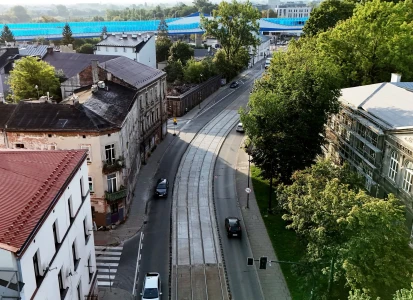
Infrastructure tram
Kraków - ul Limanowskiego
Kraków2026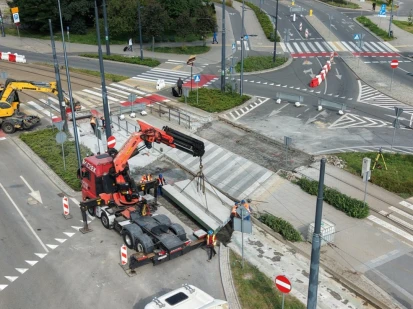
Infrastructure tram
Olsztyn - ul. Dworcowa
Olsztyn2026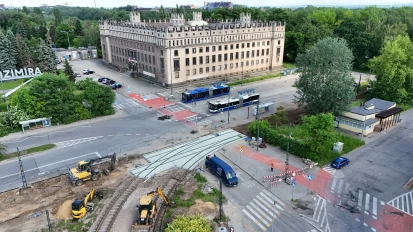
Infrastructure tram
Kraków - Al. Solidarności II
Kraków2026
Infrastructure tram
Kraków - Straszewskiego/UJ Junction
Kraków2026
Infrastructure tram
Wrocław - Tarnogajska
Wrocław2025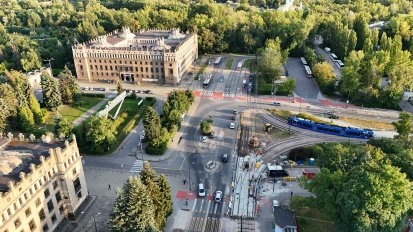
Infrastructure tram
Kraków - Al. Solidarności
Kraków2025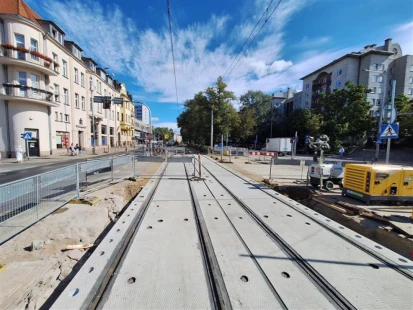
Infrastructure tram
Wrocław - Jastrzębia - CONTRACK for the first time in Wrocław
Wrocław2025
Infrastructure tram
Poznań - Wierzbięcice - Contrack in Poznań - Wierzbięcice tram switch
Poznań2026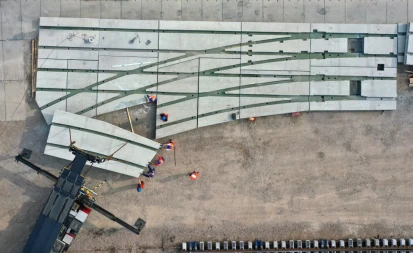
Infrastructure tram
CONTRACK at Zawiszy Square in Warsaw
Warszawa2025
Infrastructure tram
Poznań - Forteczna II
Poznań2024
Infrastructure tram
Mysłowice - Świerczyny - CONTRACK in less than 100 hours!
Mysłowice2024
Infrastructure tram
Ruda Śląska - Chebzie tram terminus with CONTRACK prefabricated elements
Ruda Śląska2024
Infrastructure tram
Poznań - Forteczna I - Poznań turnout system using CONTRACK technology
Poznań2023
Infrastructure tram
Bytom - The first prefabricated tram switch built
Bytom2023